Egress Window & Window Well Installation in Monona, WI
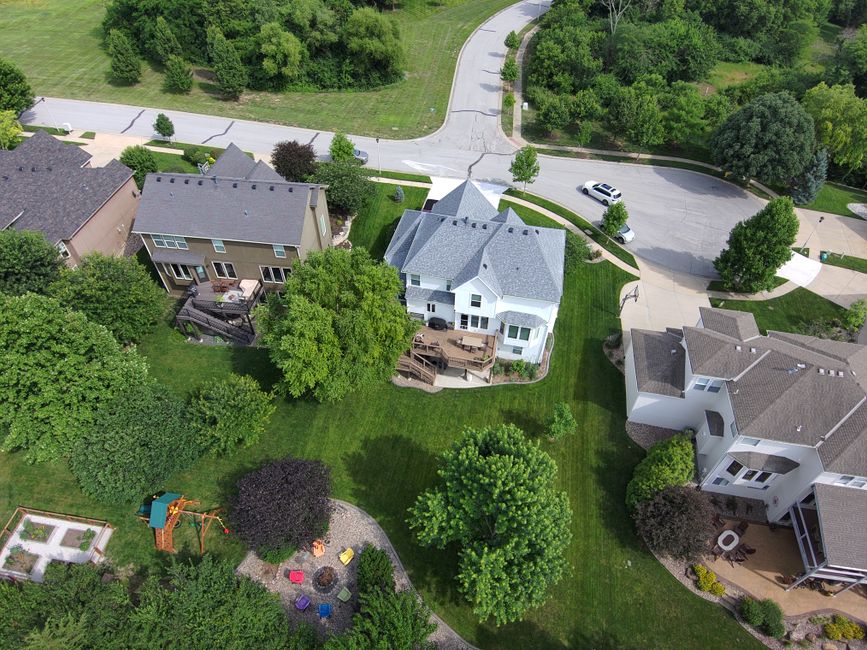
Monona is a small city almost entirely surrounded by Madison, sitting on the southeast shore of the lake that shares its name. Because Monona built out decades ago rather than continuing to expand outward, its housing stock skews older than a lot of the newer subdivisions further out in Dane County — a mix of postwar and mid-century homes on modest, well-established lots, many of them backing onto the lake or one of the city's older residential streets. That age profile is exactly what makes egress code relevant to a large share of Monona's basements.
Basements Built Before Anyone Was Finishing Them
A basement in a Monona home built in the 1950s or 1960s was designed as mechanical and storage space, not living space. Small basement windows were normal, sized for light and ventilation rather than for anyone to climb through in an emergency. Decades later, as those basements get finished into family rooms, offices, or bedrooms, the original windows are frequently the one detail that never got revisited — they were never a safety problem when the space was a laundry room, but they become one the moment somebody starts sleeping down there.
The Bedroom Rule That Changes Everything
Wisconsin's Uniform Dwelling Code is specific about this: any basement or ground-floor room used for sleeping needs at least two ways out, and for a below-grade bedroom, the second way out has to be a code-compliant egress window (SPS 321.03(5)(b)1. and (5)(b)4.d.). It doesn't matter whether the room is called a "bedroom" on paper — if it's used as one, the egress requirement applies. In a lot of Monona's older homes, that's the gap: a basement room that functions as a bedroom but still has the same small window it was built with.
What "Code-Compliant" Actually Means
The Wisconsin code sets two dimension rules that matter most for an older Monona basement. First, the opening itself has to measure at least 20 inches by 24 inches, regardless of the overall window's shape (SPS 321.03(6)(b)1.) — a lot of original 1950s and 60s basement windows fall well short of that on at least one dimension. Second, the lowest point of the clear opening can't sit more than 60 inches above the basement floor (SPS 321.03(6)(d)1.); if it's more than 46 inches up, the code requires a permanent platform at least 20 inches wide and 9 inches deep, rated to hold 200 pounds, with its top surface no more than 24 inches above the floor (SPS 321.03(6)(d)2.–4.). Homes with taller foundation walls — common in some of Monona's older lakeside streets — are the ones most likely to need that platform addressed.
Window Wells on a Built-Out Lot
Enlarging a basement window to egress size on the outside means adding or resizing a window well, and Wisconsin's rule there is also dimension-specific: the well has to be at least as wide as the window and project at least 36 inches out from the foundation wall (SPS 321.03(6)(e)). On a lot that was platted decades ago and never designed around a full-size window well, that 36-inch projection can run into an existing walkway, deck footing, or property line — something worth having evaluated at the specific address rather than assumed. If the bottom of the well ends up more than 46 inches below grade, the code also requires a permanent ladder or steps built into it (SPS 321.03(6)(e)4.–5.).
Lake Proximity and Well Drainage
Monona's identity is tied to the lake it sits on, and a lakeside or near-lake property carries one additional consideration for window well work: ground close to a lake tends to hold more moisture and drain less predictably than ground set further back, which makes the code's drainage requirement for window wells worth taking seriously rather than treating as a formality. Wisconsin's code requires a window well to be built so that water doesn't work its way into the dwelling (SPS 321.03(6)(e)6.), and on a lot near Lake Monona, getting the well's drainage path right on the first attempt matters more than it would on a property set well back from the water.
Window Well Covers on an Established Property
A number of Monona's older homes already have some kind of window well cover in place, sometimes added long after the well itself and not always sized or installed with the current window in mind. Whatever cover goes on a well — old or new — it has to be one that can be opened or removed from inside the basement without tools or special knowledge, because a cover that blocks or complicates the escape path defeats the purpose of the egress window underneath it. This is a safety point that applies regardless of the well's age or the cover's material, and it's worth checking on any Monona property where a cover was added separately from the original well installation.
Permits in Monona
Wisconsin's building code doesn't set a single statewide permit rule for every alteration — permits for this kind of work are required "when required by local ordinance," with the actual permit authority sitting at the municipal level (SPS 320.09(2)(b)1.). Monona sets its own permit requirements for basement and foundation work, so anyone planning an egress window or window well project here should confirm what's required with the City of Monona directly before work starts, rather than assuming the rule from a different Dane County municipality applies.
Requesting a Quote for a Monona Property
Every basement in Monona is going to have its own combination of foundation height, wall material, and existing window placement, and those details are what actually determine the right approach — whether that's enlarging an existing opening, cutting a new one, or replacing a window well that was never sized for the current window. Request a quote through the form below or call (908) 493-5028, and describe the home's age and basement layout — that's what shapes which of the services below fits the property.