Snow Load and Foot-Traffic Load on Window Well Covers
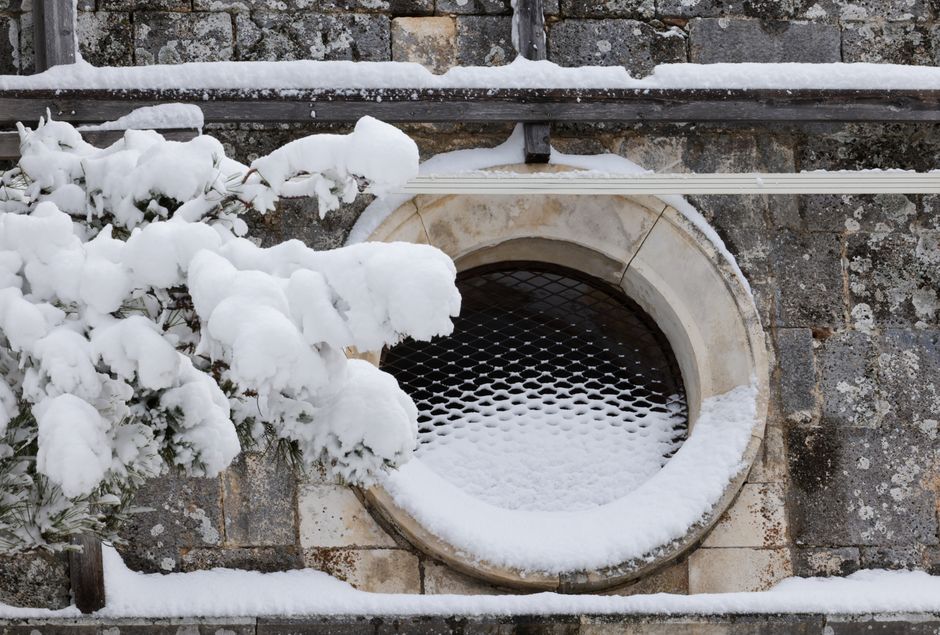
Window well covers in Dane County deal with two kinds of load that don't always get the same consideration: the weight of accumulated snow sitting on top of the cover for weeks at a time, and the occasional foot traffic a cover near a walkway, patio, or mowed lawn edge is likely to see. Neither one is the same as the other, and a cover rated for one isn't automatically rated for both.
Snow load
Wisconsin winters put real, sustained weight on anything left exposed outside, and a window well cover is no exception. Snow doesn't just sit — it compacts under its own weight and under additional snow falling on top of it, and it can arrive suddenly and heavily in a single event. Where a cover sits also matters as much as how much snow falls generally:
- Roof snow shed. A well positioned under or near a roofline where snow slides off in a mass gets a very different load than one in an open part of the yard, even during the same storm.
- Drift accumulation. Wind can pile snow against a foundation wall well beyond what fell there directly, especially along a wall that catches prevailing wind.
- Ice buildup and freeze-thaw cycles. Repeated melting and refreezing can add a layer of ice on top of or underneath accumulated snow, which is heavier and more rigid than fresh snow and can also seal a cover shut if it isn't checked.
Manufacturers publish load ratings for their covers, but those ratings are tested under specific conditions that may not match a drifted, ice-crusted pile against a foundation wall in a Dane County February. Rather than relying on a single number, it's worth matching the cover choice to where the well actually sits — a well tucked against a wall that catches heavy drift or roof shed deserves a sturdier cover and closer winter attention than one in an open, wind-exposed spot.
Foot-traffic load
Some window wells sit along a path people actually cross — near a walkway, a mowed lawn edge, or a spot someone might step on while doing yard work, running an extension cord, or shoveling snow off a nearby path. Others sit in a flower bed or mulched area that nobody has a reason to walk across.
That distinction matters because not every cover is designed to be walked on. A cover meant only to shed snow and keep debris out can flex, crack, or fail under a person's weight even if it holds up fine to the snow it was designed for. If there's any real chance someone will step on the cover — intentionally or not — that's worth accounting for when choosing the cover, not something to find out the first time it happens.
Things that increase the odds of incidental foot traffic:
- The well sits close to a regularly used walkway or driveway edge.
- The area is mowed or shoveled routinely, putting a person nearby with reduced visibility of exactly where the well's edge is (especially under snow cover, when the cover's outline can disappear entirely).
- Kids or guests use the yard without knowing where a well is.
Snow, drainage, and the well underneath
Snow load on a cover doesn't stay on the cover forever — eventually it melts, and where that meltwater goes matters as much as how heavy the snow was. A cover that sheds melting snow away from the well's edges works with the well's drainage; one that lets meltwater pool on top and seep in around the edges can add to the same standing-water problem a cover is often installed to prevent in the first place. A well with a functioning gravel bed and drain outlet underneath handles incidental meltwater fine; a well whose drainage has already degraded is more exposed to whatever gets past or through the cover during a thaw. If a well is holding water even with a cover in place, the issue is more likely the well's drainage than the cover's load rating — see window well replacement if that's the case.
How this factors into choosing a cover
Between snow load and foot traffic, foot traffic is usually the more variable and more site-specific of the two — one household's well sits three feet from a shoveled path, another's sits in an untouched corner of the yard. That's a reason to think through actual use of the specific spot rather than assuming a cover marketed as heavy-duty automatically covers every situation, or that a lighter cover is fine just because the well "isn't really in the way." A cover that turns out to be walked on occasionally, even if it wasn't meant to be, is safer chosen with that possibility in mind from the start than discovered after the fact.
Where egress covers fit into this
For a cover over an egress window, load capacity is only half the picture. Whatever a cover is rated to hold, it still has to open or come off from inside without tools, every time — including right after a heavy snow load has been sitting on it. A cover that's technically rated for a foot of snow but freezes solid to the well's rim in the process isn't meeting that standard, regardless of its load number. Do window well covers interfere with emergency egress? covers that requirement in full.
Matching the cover to the site, not a generic number
Rather than shopping by a single load rating in isolation, it's worth thinking through:
- Where this specific well sits relative to rooflines, prevailing wind, and foot traffic.
- Whether the cover needs to be walkable-rated or snow-shedding only.
- How the material holds up to repeated freeze-thaw cycles over years, not just one winter.
- How the cover's hardware performs once it's iced over, not just when it's clean and new.
Window well cover materials compared goes through how different materials tend to hold up under these conditions, and window well covers covers how load and fit considerations come together with the well's own dimensions.