Signs a Window Well Needs Replacing
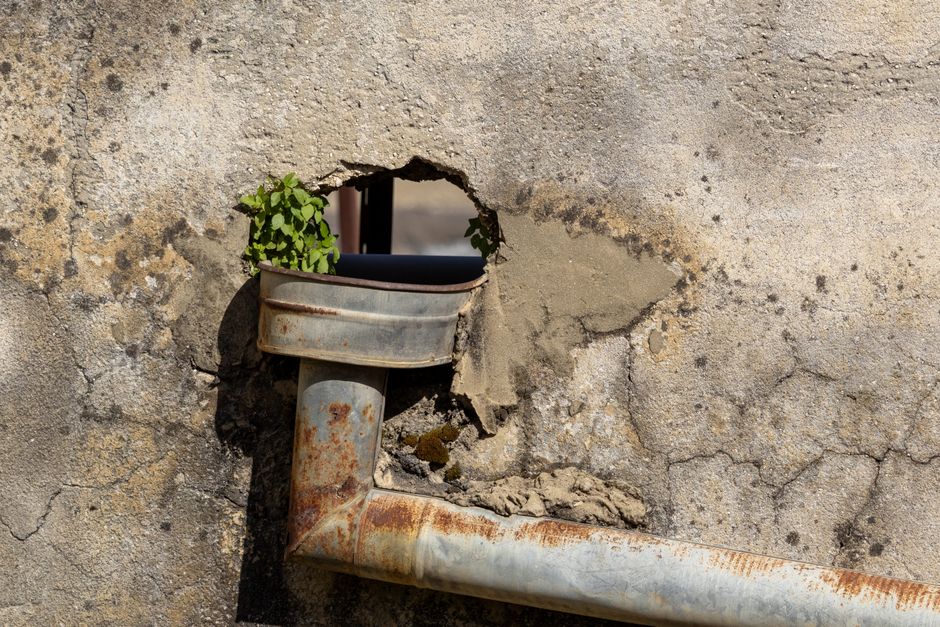
A window well can look rough and still be perfectly serviceable, or it can look mostly fine from inside the basement and already be failing where it counts — against the soil, below grade, out of view. Telling those two situations apart matters, because a repair or a liner fixes one problem and a full replacement fixes a different one. The signs below are the ones that point toward replacement rather than a smaller fix.
Rust Holes and Thinning Metal
Corrugated steel wells corrode from the outside in, against the soil, long before rust shows up on the interior surface facing the window. By the time a hole is visible from inside the well, the metal around it has usually thinned across a much wider area than the hole itself suggests. A well with one or two small perforations near the base is often past the point where a patch holds for long, because the same soil moisture and freeze-thaw exposure that caused the first hole is working on the metal around it too. Multiple rust-through spots, especially near the bottom where the well contacts wet soil most directly, is one of the clearer signals that the well itself — not just a coating or a seam — has reached the end of its service life.
Visible Separation From the Foundation Wall
A window well is supposed to sit tight against the foundation, with no meaningful gap where soil or water can work its way in behind it. A well that has pulled away from the wall, even by an inch or two, usually means the anchoring has failed, the soil behind it has shifted, or the well itself has deformed under pressure. That gap doesn't stay the same size — freeze-thaw cycles tend to widen it over time, and once water and fine soil start migrating through it, the problem compounds each season rather than staying stable.
A Well That's Sunk, Leaning, or Bowed
Soil pressure on the outside of a window well is constant, and a well that was installed without enough compaction behind it, or one that's simply old, can start to show that pressure as a lean, a bow in the side walls, or a top edge that's settled below where it started. A well whose top rim now sits at or below grade level has lost part of its job entirely, since surface water that should run past it can instead run straight in. A visible lean or a bowed wall section is a structural sign, not a cosmetic one — it means the well is losing its ability to hold its shape against the soil around it, and that trend doesn't reverse on its own.
Debris and Sediment Buildup That Keeps Coming Back
A window well that fills with leaves, dirt, and windblown debris faster than it should, or that needs clearing out repeatedly within the same season, can point to a well that's settled below its intended height relative to the surrounding grade. A well sitting at the correct height sheds most surface debris around it rather than catching it; one that's sunk becomes a low point in the yard that collects runoff, leaves, and sediment by default. Recurring buildup on its own isn't a replacement-level sign, but paired with a well that also looks lower than it used to, it points toward the same underlying settling problem rather than two unrelated issues.
Standing Water That Won't Clear
A well that holds water for hours or days after rain, rather than draining through the base or an attached drain line, points to a problem — but not always the same problem. Sometimes it's a drainage issue that a repair or a liner addresses on its own. Other times, standing water is a symptom of a structural failure: a well that's settled unevenly no longer slopes the way it was built to, or gaps at the foundation wall are letting groundwater in faster than the drainage can clear it. A well that used to drain fine and now consistently holds water is worth a closer look rather than an assumption either way.
Gaps or Deterioration in the Foundation Opening
The window well isn't the only component worth checking when something looks off — the foundation opening it sits against matters too. Crumbling concrete or block at the edges of the opening, or a widening gap between the window frame and the foundation itself, is a sign that the problem isn't limited to the well. Water finding its way behind a well often shows up first as staining or efflorescence on the foundation wall just above or beside it, which is worth noting even if the well's exterior still looks intact, since it points to moisture getting past the well rather than being stopped by it.
A Well That No Longer Matches the Window It Serves
Window wells and windows aren't always replaced together, and a well that was sized correctly for one window can end up undersized once that window is swapped for a larger egress unit. Wisconsin's Uniform Dwelling Code requires a window well to be at least as wide as the window it serves and to project at least 36 inches from the foundation wall (SPS 321.03(6)(e)1.). A well that predates a window upgrade, or one that was undersized from the start, doesn't meet that standard just because it's already in the ground — and for a well serving a bedroom's egress opening, that's not a cosmetic gap.
When Replacement Is the Better Call
A well showing one of the structural signs above — rust-through in more than one spot, separation from the wall, sinking or bowing, or a size that no longer matches the window — is usually past the point where a repair buys much time. Can you replace a window well without replacing the window? covers how that decision plays out when the window itself is still sound and only the well has failed. For a look at what full replacement actually involves, see window well replacement.