Rust and Corrosion in Metal Window Wells
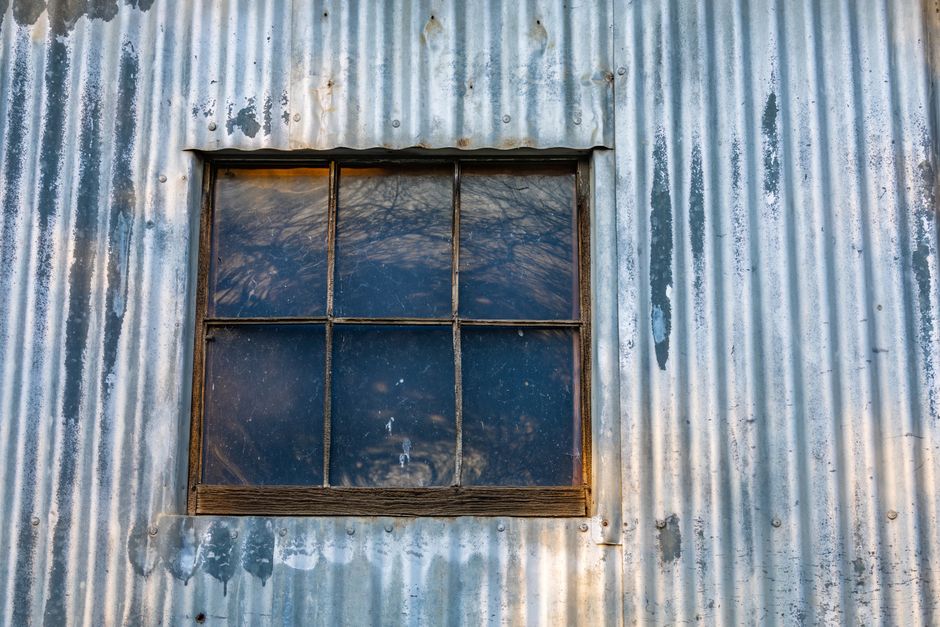
Metal is the most common window well material in older Dane County homes, mainly because corrugated steel wells have historically been inexpensive and straightforward to install. That same material is also the one most likely to eventually corrode past the point of a simple fix. Understanding how and why metal wells rust helps explain why a well can look fine from the inside and still be much closer to failure than it appears.
Why Corrosion Starts on the Soil Side, Not the Visible Side
A window well spends most of its surface area in direct contact with soil, not air. The interior face — the side visible from inside the basement, looking out through the window — is exposed to open air and, in most cases, sheds moisture faster than it accumulates. The exterior face pressed against backfill soil is a different environment entirely: damp, largely un-aerated, and in contact with soil chemistry that varies from one yard to the next. Corrosion on galvanized or painted steel almost always establishes itself on that soil-facing side first, working through the protective coating and into the base metal well before any sign of it reaches the interior surface.
Freeze-Thaw Cycles and Moisture Retention
Dane County's winters put window wells through repeated freeze-thaw cycles each year, and that cycling matters more for corrosion than steady cold or steady moisture would on their own. Water that gets into a coating breach, a seam, or a scratch in the galvanizing can freeze, expand, and widen the opening slightly. Each thaw lets a little more moisture in before the next freeze repeats the process. Over years, that slow mechanical widening turns a small coating flaw into a real hole, and it's a big part of why a well's corrosion timeline is rarely a straight line — it tends to accelerate once the protective layer has been breached in more than one place.
Soil Chemistry and Why Corrosion Rates Vary So Much
Two identical metal wells installed the same year, in yards a short distance apart, can corrode at noticeably different rates because the soil pressed against each one isn't identical. Soil pH, drainage characteristics, and how much organic material is mixed into the backfill all affect how aggressively that soil corrodes bare or coated steel. A well backfilled with well-draining, low-organic fill tends to hold less standing moisture against the metal than one backfilled with denser clay or soil high in decomposing organic matter, which is part of why corrosion timelines for metal wells are more of a range than a fixed number of years.
What Surface Rust Looks Like vs. Structural Rust-Through
Light surface rust — a rough, orange-brown discoloration on the interior corrugations — is common on older metal wells and isn't, by itself, a sign of failure. It usually means the coating has worn thin in spots but the base metal underneath is still largely intact. Structural rust-through is a different category: actual perforation, flaking metal that comes away when touched, or a soft, crumbly texture where solid steel should be. The distinction matters because surface rust is often a cosmetic and early-warning issue, while rust-through means the metal's structural integrity in that area is already compromised, not just its appearance.
Galvanized and Coated Wells vs. Bare or Worn Steel
Galvanized coatings and factory paint finishes are what stand between bare steel and the soil in the first place, and how long a well lasts has a lot to do with how intact that coating still is. A coating that's scratched during installation, damaged by a rock in the backfill, or simply worn thin after decades in the ground stops doing its job in that spot even if the rest of the well still looks protected. Once bare steel is exposed to damp soil, corrosion at that point tends to proceed faster than on the surrounding coated surface, which is part of why rust on an older metal well often shows up as isolated patches rather than uniform wear across the whole panel.
How Corrosion Interacts With a Well's Anchoring
Metal wells are typically secured to the foundation wall with fasteners near the top edge, and corrosion doesn't limit itself to the visible panel surface — it can affect those fastener points and the flange where the well meets the wall just as easily. A well whose panel still looks mostly solid can still have compromised anchoring if corrosion has worked into the fasteners or the mounting flange, which is one reason a well that seems structurally fine when pushed on from the front can still be loose or partially detached at the top.
Why a Well Can Look Fine From Inside and Still Be Failing
Because corrosion starts on the buried, soil-facing side, the interior surface — the one actually visible during day-to-day use of the basement — is the last part of the well to show damage, not the first. A well can present as solid from inside the window for years after corrosion has already thinned the metal significantly on the exterior face. That lag is the main reason a metal well's condition can be genuinely surprising once it's exposed for closer inspection, and why an assessment based only on what's visible from inside a basement window can understate how far along the corrosion actually is.
When Rust Points to Repair vs. Replacement
A small amount of surface rust with no soft spots or visible thinning is often something a coating touch-up or a liner addresses. Multiple rust-through spots, soft or flaking metal, or corrosion concentrated where the well meets the soil at its base point toward a well that's past the stage where a patch holds for long. Window well replacement covers what's involved once a metal well has reached that point, including how a replacement well gets sized and installed against the window it serves.