Can a Basement Room Be Called a Bedroom Without an Egress Window?
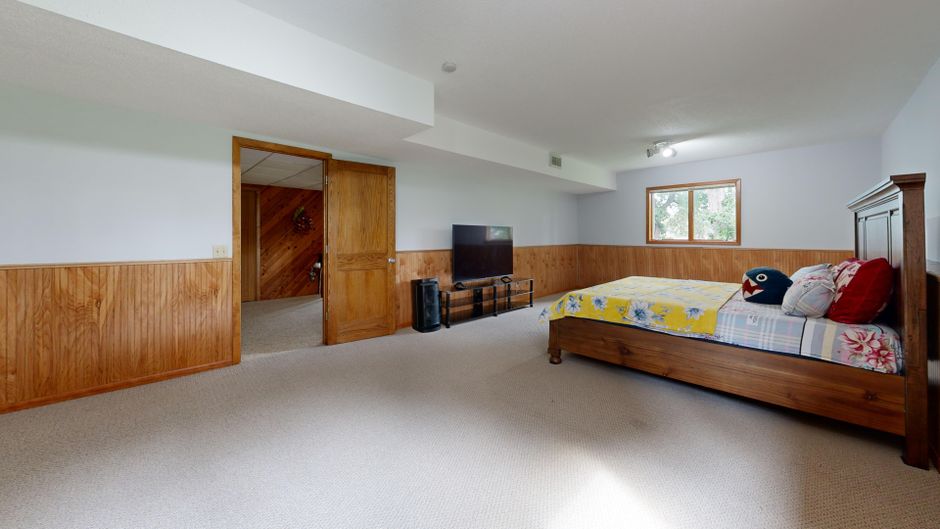
Under Wisconsin's building code, the short answer is no — a basement or ground-floor room used for sleeping needs a second exit beyond the door, and for a bedroom, that second exit specifically has to be a code-compliant egress window. A basement room without one doesn't meet the code definition of a legal bedroom, regardless of how it's furnished or what it gets called informally.
The Rule Behind the Answer
Wisconsin's Uniform Dwelling Code requires at least two exits from any basement or ground-floor area used for sleeping (SPS 321.03(5)(b)1.). For a bedroom specifically, the code identifies what that second exit has to be: a window meeting the egress dimension requirements under sub. (6) of the same section (SPS 321.03(5)(b)4.d.). A closet, a nice paint job, and a comfortable bed don't change that requirement — the trigger is how the room functions, not how it's decorated or listed.
Why "Bedroom" Isn't Just a Label
This is where a lot of confusion comes from. Homeowners (and sometimes real estate listings) will describe a finished basement space as a bedroom, guest room, or "flex room used as a bedroom" without it actually meeting the code definition of one. The building code doesn't care what a room is called — it cares about function. A basement room being regularly used for sleeping is what triggers the two-exit requirement, whether or not anyone has formally labeled it a bedroom on a floor plan or a listing sheet.
What a Room Without an Egress Window Can Still Be
A finished basement space without an egress window isn't wasted — it just isn't a code-compliant bedroom. A family room, home office, playroom, home gym, or den doesn't trigger the two-exit sleeping-room rule, and none of those uses require an egress window under this part of the code. The issue only arises when a space is going to function as a sleeping room on a regular basis.
The Real Consequences of Skipping It
Finishing a basement room as if it were a bedroom — bed, closet, the works — without adding a code-compliant egress window doesn't stop anyone from using it that way informally. But it does mean the room can't be represented as a legal bedroom, which matters at points like a home sale (where square footage and bedroom count are often verified against permits) or an insurance or appraisal review. It's also, more basically, a real safety gap: the reasoning behind the rule — a second way out if the main path is blocked — doesn't stop applying just because a permit wasn't pulled.
How This Comes Up in Practice
This question tends to surface in a few recurring situations: a homeowner finishing a basement for the first time and planning the layout around a future bedroom, a buyer evaluating a home where a basement space is already furnished as a bedroom, or a homeowner comparing what a real estate listing calls a room against what the property's own permit history shows. In every one of these situations, the answer comes down to the same underlying question — does the room have a code-compliant egress window — rather than anything about the room's furnishings, paint, or flooring.
Bedroom Count and Property Value
Bedroom count is one of the more consequential numbers attached to a residential property, since it factors into appraisals, listing descriptions, and how a home compares to others in a similar size range. A basement room that functions as a bedroom day-to-day but was never brought up to egress standard creates a mismatch between how a property is used and what it can legally be represented as — a gap that tends to get noticed exactly when it matters most, such as during a sale, a refinance appraisal, or an insurance claim tied to the room.
Making an Existing Basement Room Compliant
For a basement room that's already being used as a bedroom without an egress window, the fix is adding one that meets Wisconsin's opening size, sill-height, and window well requirements — either by enlarging an existing window opening or cutting a new one, along with the well outside it. What is an egress window and why Wisconsin requires one covers the underlying rule and reasoning in more depth.
Egress Windows and Rooms Used Only Occasionally
A related question that comes up is whether a room used for sleeping only occasionally — a guest room that isn't slept in every night, for example — still triggers the rule. Wisconsin's code ties the requirement to a room's function as a sleeping room, not to how often it's used for that purpose, so a basement guest room is generally held to the same standard as a primary bedroom for this purpose. Treating the rule as if it only applies to a household's main bedroom is a common assumption that doesn't hold up against how the code is actually written.
Where to Go From Here
Egress window installation covers what Wisconsin's code actually requires for opening size, sill height, and window wells, and what's involved in bringing an existing basement room up to a code-compliant standard.